Page 45 of 124

India seeks web crackdown after failed talks with industry

Tuesday, December 6, 2011

Indian authorities today declared an intent to force web companies to screen content for “offensive” and “blasphemous material”. The move follows failed talks yesterday with Facebook, Google, Yahoo!, and Microsoft.

Communications Minister Kapil Sibal says “My aim is that insulting material never gets uploaded”, and that web firms “will have to give us the data, where these images are being uploaded and who is doing it.” The government’s planned new policy is in response to web-based firms informing him they could not prevent such material being uploaded. “They have given it to me in writing that they will not do anything until we get an order from the court,” even though “At a meeting on 4 November, we showed them some of the photos and they too agreed that the photos were offensive,” said Sibal. The disputed material was first discussed three months ago.

Sibal calls the situation “unacceptable” and disputes the firms’ defence of being merely “platforms” for others to add material. He claims they showed their “intention was not to cooperate”. Facebook promised ongoing dialogue in a statement and “[recognise] the government’s interest in minimising the amount of abusive content”. They also promised to “remove any content that violates our terms, which are designed to keep material that is hateful, threatening, incites violence or contains nudity off the service.”

Google say they remove material breaching their policies and to comply with local legislation. “But when content is legal and doesn’t violate our policies, we won’t remove it just because it’s controversial, as we believe that people’s differing views, so long as they’re legal, should be respected and protected,” the company added.

“We have to take care of the sensibilities of our people, we have to protect their sensibilities. Our cultural ethos is very important to us,” Sibal said today. A response from web firms of “we throw up our hands, we can’t do anything about this” would not be tolerated.

Although some reports suggest the spat has been triggered by critiques of powerful politician Sonia Gandhi, Sibal claims the firms have previously hesitated to respond to requests for details of “terrorists”. All the material the government wishes to censor is “absolutely illegal, defamatory, pornographic or other similar kind of material” says Congress spokesman Abhishek Manu Singhvi. Material in question includes cartoons of Gandhi and Prime Minister Manmohan Singh and material mocking religion including an image depicting pigs in Mecca.

Indian computer security expert Vijay Mukhi rubbished the suggestions. “The idea of prescreening is impossible. How will they do it?… There is no technology currently that determines whether content is ‘defamatory’ or ‘offensive’,” he told Reuters. This sentiment was broadly echoed by large numbers on Twitter; the tag #IdiotKapilSibal was among the nation’s Twitter users’ most-used today. Twitter and Facebook were the organising points earlier this year for an anti-graft campaign that saw thousands protesting and new laws passed.

Internet companies insist too much material flows through the web to make such screening plausible. Sibal says the firms are applying US standards which do not take Indian needs into account.

Research in Motion last year resisted Indian security demands for access to encrypted BlackBerry communications. The government gave up that request but did manage to gain limited access to some BlackBerry communications. Skype and Google were told then that local servers would be mandatory, allowing the government to inspect emails.

About 100 million of India’s 1.2 billion people are online. There are 28 million Indian Facebook profiles. Google says it has received 68 content removal requests from Indian officials this year, and there have also been concerns Google Earth could be used to plan militant attacks.

India’s new moves follow criticism of the United Kingdom earlier this year. The UK proposed social media restrictions following riots while the Foreign Secretary simultaneously criticised other nations using social media controls to limit protest.

Retrieved from “https://en.wikinews.org/w/index.php?title=India_seeks_web_crackdown_after_failed_talks_with_industry&oldid=4374712”

FEMA accused of misusing trained disaster workers as public-relations workers

Monday, September 12, 2005

The Federal Emergency Management Agency (FEMA) is being criticized for misallocation of personnel in the wake of Hurricane Katrina. FEMA representatives said they requested volunteers from fire departments around the U.S., to handle its community relations campaign. However, a document FEMA sent to local fire departments asked for firefighters with very specific skills and who were capable of working in “austere conditions”. Fire departments around the nation responded by sending crews to the FEMA staging ground in Atlanta. Some of these crews were unaware that they were only going to be used for public relations work. Others, however, merely hoped that FEMA would allocate them to rescue and damage control operations once it saw their qualifications.

The firefighter’s objections are particularly poignant as one of FEMA public relations training seminars coincided with New Orleans Mayor Ray Nagin plea for firefighters on national television, to relieve his own exhausted crews. It is unclear if FEMA’s request for firefighters prevented any municipalities from responding to Mayor Nagin’s request.

Some firefighters have objected to their use as FEMA public relations officers because their municipalities must bear the cost of their salaries, as well as endure reduced firefighting capacity. FEMA has stated that it sought to use firefighters to avoid background checks required of federal employees.

Firefighters began receiving their assignments Monday, September 5th. Among these was a crew of 50 assigned to tour the devastated areas with President Bush and the press.

Retrieved from “https://en.wikinews.org/w/index.php?title=FEMA_accused_of_misusing_trained_disaster_workers_as_public-relations_workers&oldid=1982691”

On Dog Bites And Other Dog Injuries (Part 2)

Precautionary measures are provided by experts and medical practitioners to avoid getting bitten. However, when one gets dog bites, one should know his/her rights, especially when it comes to recovering damages.

If you or a family is bitten by a dog, you should:

try to identify the dog. If the dog has rabies, it is important that you should seek medical care and get the appropriate vaccines against the rabies.

not argue with the owner of the dog. Arguing won’t do any good, especially when the owner doesn’t want to believe what happened. Many owners believe in the goodness of their pets that’s why it’s hard for them to accept that their dog would bite without severe provocation.

not sign any papers or make statements on record. The dog owner, property owner or their insurance company might try to get you to sign papers or record your statements on tape. Take note that their primary goal is to get you to make statements that will help in their cause to avoid possible liabilities for your injuries. If this happens, you should consider having a lawyer present to assist you.

make a report to the police. Report the incident to the police and they will investigate the circumstances of the dog bite. They will then provide a report that may help establish the incident.

seek medical care. The dog that bit you may have rabies. In that case, you will need appropriate vaccines to counter the effects of rabies. On the other hand, dog bites involve puncture wounds from fangs. These can be easily infected. Also, you may have scrapes and abrasions from protecting yourself during the attack. An infected wound can result in a worse scar, and even serious complications and consequences.

consider consulting a lawyer. A reliable lawyer can help you get back your financial losses as well as the emotional and psychological effects from the injuries caused by the incident. Even if the insurance company offers to give you payment, it helps to have a lawyer review the proposed settlement. A lawyer you can trust can help you obtain a fair outcome.

The Law

Different laws on dog bite injuries are provided in different states. In Michigan, victims of dog bites can easily establish liability on the part of the owner. Under Michigan law, it doesn’t matter if the dog has never bitten another person. There is no “free bite rule”. Dog owners are liable even if it’s the first time that they’re dogs bit somebody.

On the other hand, people may also be injured even without getting bitten by a dog. An attack may cause injury through the dog’s claws, when the person was knock over, or when the driver of a bicycle was upset by a dog. If injured, these individuals may file claims, and recover damages from the dog’s owner.

Check your state’s law for information on dog bites.

Ontario Votes 2007: Interview with Green Party candidate Lloyd Helferty, Thornhill

Sunday, October 7, 2007

Lloyd Helferty is running for the Green Party of Ontario in the Ontario provincial election, in the Thornhill riding. Wikinews’ Nick Moreau interviewed him regarding his values, his experience, and his campaign.

Stay tuned for further interviews; every candidate from every party is eligible, and will be contacted. Expect interviews from Liberals, Progressive Conservatives, New Democratic Party members, Ontario Greens, as well as members from the Family Coalition, Freedom, Communist, Libertarian, and Confederation of Regions parties, as well as independents.

Retrieved from “https://en.wikinews.org/w/index.php?title=Ontario_Votes_2007:_Interview_with_Green_Party_candidate_Lloyd_Helferty,_Thornhill&oldid=1879939”

Athletes prepare for 2012 Summer Paralympics at the Paralympic Fitness Centre

Monday, August 27, 2012

London, England — As Paralympians ready for the Games which are set to open later this week, they have access to a world class fitness center inside the Paralympic Village which is designed to maximise their pre-Game preparations.

According to volunteers staffing the center, instead of being a single large room, as in Beijing, the building has numerous rooms. It, along with the adjacent Village Services Centre, is designed to be converted into a school after the games conclude. Rooms have been structured as a gym, an auditorium, and science laboratories.

Gym equipment is supplied by Technogym, an Italian firm that has supplied gym equipment for the Olympics since 2000. Equipment has been provided not just for for the Fitness Centre, but for gyms at all the Olympic venues. The newest equipment is oriented toward maximum flexibility, allowing athletes to exercise the particular muscles that they most require for their sport.

In addition to the equipment, the Fitness Centre also provides instructors trained in the use of the equipment, the likes of which athletes from many countries have never seen before. There are also a number of instructors available to provide motivational training.

  • 1
  • 2
  • 3
  • 4
  • 5
  • 6
  • 7
  • 8
  • 9

Retrieved from “https://en.wikinews.org/w/index.php?title=Athletes_prepare_for_2012_Summer_Paralympics_at_the_Paralympic_Fitness_Centre&oldid=1731640”

Canada, EU, UK, US impose sanctions on Belarus over Ryanair hijacking

Wednesday, June 23, 2021

On Monday, Canada, the European Union (EU), the United Kingdom and the United States imposed new sanctions on senior officials and entities in Belarus over the May 23 diversion of a Ryanair flight and subsequent arrest of dissident journalist Roman Protasevich and his girlfriend Sofia Sapega, as well as “repressive practices” committed by the Belarusian government.

The joint action was aimed at putting pressure on Belarusian president Alexander Lukashenko’s “regime”, a joint statement read, citing “continued attacks on human rights, fundamental freedoms, and international law”, as well as the “politically motivated” arrest of Mr Protasevich and Ms Sapega.

The statement went on to express support for “the long-suppressed democratic aspirations of the people of Belarus”, calling for Belarusian co-operation in investigations into the incident, the release of all political prisoners, adherence to the recommendations of an expert mission by the Organization for Security and Co-operation in Europe (OSCE), of which Belarus is a participating state, and OSCE-facilitated dialogue between the government and opposition.

The circumstances surrounding the forced landing of Ryanair flight FR4978 from Lithuania to Greece in Minsk, the Belarusian capital, are contested. As reported by Sky News, state media says the diversion was due to threat of explosives on board, a claim Global Affairs Canada calls “dubious and still unverified”.

Total restrictive measures varied between the countries and regional organisation. Canada sanctioned 17 new individuals for a total of 72, and five entities described in a press release as being “due to the ongoing disregard for human rights demonstrated”.

The EU, through the Council of the European Union, extended its restrictive measures by 78 individuals and eight entities related either to human rights violations or the “forced and unlawful landing”, to a total of 166 individuals and fifteen entities. Those who are impacted, including judges, businesspeople, university rectors and government ministers, will be subject to an asset freeze, and persons affected prohibited to enter or transit through EU territory.

The measures also prohibit EU citizens and companies from making money available to the designated. According to the Associated Press, EU policy chief Josep Borrell said the measures “are going to hurt […] the economy of Belarus heavily”. The decision to affect entities, not just individuals, foreign minister of Germany Heiko Maas said, will impact the “economic areas that are of particular significance for Belarus and for the regime’s income”; those targeted include the export of fertiliser ingredient potash, and those of tobacco and petroleum.

The United Kingdom furthered sanctions levied with Canada in September on eight Belarusian officials, including Lukashenko, his son, and senior government members. New restrictions include eleven individuals and two entities, which are henceforth subject to asset freezes and travel bans.

Among those targeted includes petroleum exporter BNK (UK) Ltd, which, according to its 2019 report of the director presented to Companies House, “provides intermediate services to oil sector companies” in Belarus. According to a government press release, UK foreign secretary Dominic Raab said “cutting off oil export revenue streams” was one way the government would “hold the [Belarusian] regime to account”.

The United States, through the State Department and Office of Foreign Assets Control under the Treasury Department, imposed visa restrictions on 46 Belarusian individuals holding “key positions” in the country, according to a press release, and added 16 individuals and five entities to a designated list. In addition to concerns of the country’s “transnational repression” and “affronts to international efforts”, the US also cited the “fraudulent” 2020 Belarusian presidential election as cause for the sanctions’ imposition.

The timing of the sanctions was questioned by Belarusian Nikolai Shchekin on state media network the Belarusian Telegraph Agency, noting the date June 21 is one day before the anniversary of the start of the German invasion of the Soviet Union, or the “Great Patriotic War”. According to CNN, the US attempted to announce its sanctions earlier, prior to a meeting between US president Joe Biden and president of Russia Vladimir Putin, but was held up by the EU.

Retrieved from “https://en.wikinews.org/w/index.php?title=Canada,_EU,_UK,_US_impose_sanctions_on_Belarus_over_Ryanair_hijacking&oldid=4672853”

Custom Car Seat Covers An Impressive Range Of Coverking Seat Covers

Custom Car Seat Covers – An Impressive Range of Coverking Seat Covers

by

Simon Joy

Getting the quality seat car seat covers is one of the important aspects that every car owner needs to thin about. If the seats are well maintained, soft, and comfortable, you will have greater pleasure while riding your vehicle. Are you looking for the quality seat accessories that are user friendly, strong, elegant, durable, and soft? Well, with the custom seat covers by Coverking, you can expect desired pleasure and convenience inside your car.

The quality of the seat covers is determined by certain aspects. These features include snug fitting, elegant appeal, durability, breathability, soft touch, color fastness, and user-friendliness among others. Though the markets are overflowed with the varieties of car seat accessories, a little number of seat covers is worth consideration.

[youtube]http://www.youtube.com/watch?v=03U_AF1vVho[/youtube]

Coverking custom seat covers are precision tailored auto accessories. Specially designed keeping the specifics of your car make and model in mind, the custom auto accessories provide perfect fitting and hug all the contours of your original upholstery nicely. Snug fitting is the most important feature that ensures greater protection and convenience.

Apart from perfect fitting and complete covering, Coverking seat covers come with several other exciting features as well. Made of tested materials, the reliable auto accessories are strong enough to deal with hazards and abuses such as friction and abuses. Since your car seats have to deal with numerous abuses, when it comes to safeguard your seats and add elegance to your car interiors, the seat covers you get must be strong and long lasting.

The Coverking seat covers give soft touch and vibrant appeal to your car seats as well. Since these are available in a wide range of colors and patterns to choose from, with the custom seat covers you can personalize the interiors of your car according to your needs and taste.

There is a wide range of car seat covers available to choose from. Some of the most effective custom car seat covers by Coverking include Neoprene seat covers, Ballistic seat covers, Tweed car seat covers, Leatherette seat covers, Velour seat covers, Genuine Leather seat covers, and Poly Cotton seat covers to name a few.

Simon Joy is professional writer with covers4auto. He writes extensively on car covers,

seat covers

, and other car accessories. For more details visit

custom seat covers

.

Article Source:

Custom Car Seat Covers – An Impressive Range of Coverking Seat Covers

Dairy cattle with names produce more milk, according to new study

Thursday, January 29, 2009

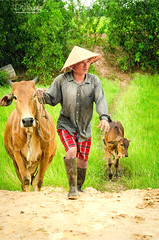
Giving a cow a name and treating her as an individual with “more personal touch” can increase milk production, so says a scientific research published in the online “Anthrozoos,” which is described as a “multidisciplinary journal of the interactions of people and animals”.

The Newcastle University‘s School of Agriculture, Food and Rural Development’s (of the Newcastle University Faculty of Science, Agriculture and Engineering) researchers have found that farmers who named their dairy cattle Ermintrude, Daisy, La vache qui rit, Buttercup, Betsy, or Gertrude, improved their overall milk yield by almost 500 pints (284 liters) annually. It means therefore, an average-sized dairy farm’s production increases by an extra 6,800 gallons a year.

“Just as people respond better to the personal touch, cows also feel happier and more relaxed if they are given a bit more one-to-one attention,” said Dr Catherine Douglas, lead researcher of the university’s School of Agriculture, Food and Rural Development. “By placing more importance on the individual, such as calling a cow by her name or interacting with the animal more as it grows up, we can not only improve the animal’s welfare and her perception of humans, but also increase milk production,” she added.

Drs Douglas and Peter Rowlinson have submitted the paper’s conclusion: “What our study shows is what many good, caring farmers have long since believed. Our data suggests that, on the whole, UK dairy farmers regard their cows as intelligent beings capable of experiencing a range of emotions.” The scientific paper also finds that “if cows are slightly fearful of humans, they could produce [the hormone] cortisol, which suppresses milk production,” Douglas noted. “Farmers who have named their cows, probably have a better relationship with them. They’re less fearful, more relaxed and less stressed, so that could have an effect on milk yield,” she added.

South Norfolk goldtop-milk producer Su Mahon, one of the country’s top breeder of Jersey dairy herds, agreed with Newcastle’s findings. “We treat all our cows like one of the family and maybe that’s why we produce more milk,” said Mrs Mahon. “The Jersey has got a mind of its own and is very intelligent. We had a cow called Florence who opened all the gates and we had to get the welder to put catches on to stop her. One of our customers asked me the other day: ‘Do your cows really know their names?’ I said: I really haven’t a clue. We always call them by their names – Florence or whatever. But whether they really do, goodness knows,” she added.

The researchers’ comparative study of production from the country’s National Milk Records reveals that “dairy farmers who reported calling their cows by name got 2,105 gallons (7,938 liters) out of their cows, compared with 2,029 gallons (7,680 liters) per 10-month lactation cycle, and regardless of the farm size or how much the cows were fed. (Some 46 percent of the farmers named their cows.)”

The Newcastle University team which has interviewed 516 UK dairy farmers, has discovered that almost half – 48% – called the cows by name, thereby cutting stress levels and reported a higher milk yield, than the 54% that did not give their cattle names and treated as just one of a herd. The study also reveals cows were made more docile while being milked.

“We love our cows here at Eachwick, and every one of them has a name,” said Dennis Gibb, with his brother Richard who co-owns Eachwick Red House Farm outside of Newcastle. “Collectively, we refer to them as ‘our ladies,’ but we know every one of them and each one has her own personality. They aren’t just our livelihood, they’re part of the family,” Gibb explained.

“My brother-in-law Bobby milks the cows and nearly all of them have their own name, which is quite something when there are about 200 of them. He would be quite happy to talk about every one of them. I think this research is great but I am not at all surprised by it. When you are working with cows on a daily basis you do get to know them individually and give then names.” Jackie Maxwell noted. Jackie and her husband Neill jointly operate the award-winning Doddington Dairy at Wooler, Doddington, Northumberland, which makes organic ice cream and cheeses with milk from its own Friesian cows.

But Marcia Endres, a University of Minnesota associate professor of dairy science, has criticized the Newcastle finding. “Individual care is important and could make a difference in health and productivity. But I would not necessarily say that just giving cows a name would be a foolproof indicator of better care,” she noted. According to a 2007 The Scientist article, named or otherwise, dairy cattle make six times more milk today than they did in the 1990s. “One reason is growth hormone that many U.S. farmers now inject their cows with to increase their milk output; another is milking practices that extend farther into cows’ pregnancies, according to the article; selective breeding also makes for lots of lactation,” it states.

Critics claimed the research was flawed and confused a correlation with causation. “Basically they asked farmers how to get more milk and whatever half the farmers said was the conclusion,” said Hank Campbell, author of Scientific Blogging. In 1996, the Department for Environment, Food and Rural Affairs provided for a complex new cattle passport system where farmers were issued with passport identities. The first calf born under the new regime were given names like “UK121216100001.”

Dr Douglas, however, counters that England doesn’t permit dairy cattle to be injected hormones. The European Union and Canada have banned recombinant bovine growth hormone (rGBH), which increases mastitis infection, requiring antibiotics treatment of infected animals. According to the Center for Food Safety, rGBH-treated cows also have higher levels of the hormone insulin-like growth factor 1 (IGF1), which may be associated with cancer.

In August 2008, Live Science published a study which revealed that cows have strange sixth sense of magnetic direction and are not as prone to cow-tipping. It cited a study of Google Earth satellite images which shows that “herds of cattle tend to face in the north-south direction of Earth’s magnetic lines while grazing or resting.”

Newcastle University is a research intensive university in Newcastle upon Tyne in the north-east of England. It was established as a School of Medicine and Surgery in 1834 and became the “University of Newcastle upon Tyne” by an Act of Parliament in August 1963.

The School of Agriculture, Food and Rural Development is a school of the Newcastle University Faculty of Science, Agriculture and Engineering, a faculty of Newcastle University. It was established in the city of Newcastle upon Tyne as the College of Physical Science in 1871 for the teaching of physical sciences, and was part of Durham University. It existed until 1937 when it joined the College of Medicine to form King’s College, Durham.

Retrieved from “https://en.wikinews.org/w/index.php?title=Dairy_cattle_with_names_produce_more_milk,_according_to_new_study&oldid=1985434”

Wikinews interviews candidate for New York City mayor Vitaly Filipchenko

Wednesday, June 16, 2021

In early May, Wikinews extended an invitation to Vitaly Filipchenko, an independent candidate in the 2021 New York City mayoral election, set to take place November 2nd, alongside other candidates. Filipchenko answered some questions about his policies and campaign during a phone interview.

Filipchenko, registered on the New York City Campaign Finance Board as Vitaly A. Filipchenko, is the first Russian candidate for New York City mayor, being born in Tomsk, Siberia in 1973, according to news agency Sputnik. He has since naturalised as a United States citizen. According to the web site, Filipchenko has been educated in road construction and maintenance and owns a moving services company; he describes himself on his web site as a “small business owner”. On his web site’s platform page, he says that “[m]y English may not be perfect – but my platform is.”

Incumbent Democrat mayor Bill de Blasio, who won re-election in the 2017 New York City mayoral election by 66.5%, cannot run for a third term under term limits. As of April 28, 22 candidates are currently running, the majority of whom are also Democrats. Ahead of the June Democratic primary for New York City mayor, a poll conducted May 23 and 24 by WPIX and Emerson College of 12 Democratic candidates with a margin of error of 3.2 per cent has former commissioner for the New York City Department of Sanitation Kathryn Garcia and Borough President of Brooklyn Eric Adams leading with 21.1% and 20.1%, respectively.

Retrieved from “https://en.wikinews.org/w/index.php?title=Wikinews_interviews_candidate_for_New_York_City_mayor_Vitaly_Filipchenko&oldid=4673651”

Interview with Bill Bousfield, Regional Council candidate for Wards 1 & 5 in Brampton, Canada

Monday, October 30, 2006

The upcoming 2006 Brampton municipal election, to be held November 13, features an array of candidates looking to represent their wards in city council or the council of the Peel Region.

Wikinews contributor Nick Moreau contacted many of the candidates, including Bill Bousfield, asking them to answer common questions sent in an email. This ward’s incumbent is Elaine Moore; also challenging Moore is Janet Hamilton and Tejinder Lamba.

Retrieved from “https://en.wikinews.org/w/index.php?title=Interview_with_Bill_Bousfield,_Regional_Council_candidate_for_Wards_1_%26_5_in_Brampton,_Canada&oldid=438255”

Page 45 of 124

Powered by WordPress & Theme by Anders Norén